Introduction To Held Breath
Some poems arrive with a destination already in mind.
Others simply begin walking.
Held Breath was one of the latter.
The starting point was a simple challenge: write about something that has been waiting. I knew only that whatever was waiting should not be named, and that the reader should be left wondering what it was waiting for.
From there, the poem found its own way.
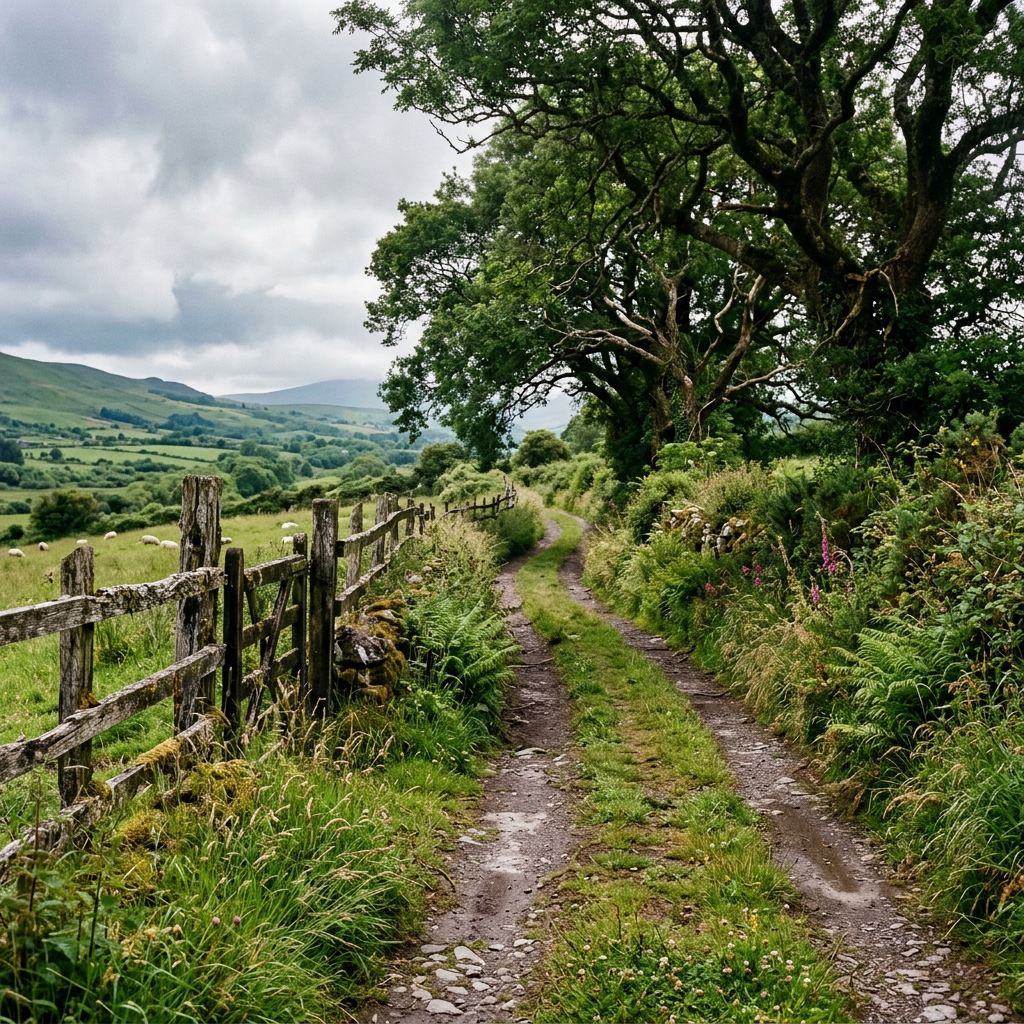
I began with the landscape—the old bóithrín, the grass, the trees, the changing light—and gradually the feeling of waiting emerged from the place itself. Nothing in the landscape was in a hurry. Nothing demanded an answer. The further into the poem I went, the more the idea of waiting seemed to belong not to one particular thing, but to everything around it.
That was when I knew I had to resist the temptation to explain.
One of the things I am learning about poetry is that sometimes the writer knows more than the reader needs to know. A poem does not always have to reveal its answer. Sometimes it is enough to leave a few clues and allow the reader to decide what they see.
The poem also became another lesson in editing.
I am beginning to understand that editing is not simply correcting mistakes after the writing is finished. It is more like renovating a room from beginning to end—moving something that is in the wrong place, taking away something that does not belong, opening a little more space where the room feels cramped, and occasionally putting something back exactly where it was because, after all that work, it was right there in the first place.
Words have had to earn their place.
So have punctuation, pauses, line breaks and silence.
Some changes have made the poem clearer. Others have simply made it different. Learning to recognise the difference has perhaps been one of the most useful parts of the process.
Eventually there comes a point when another change may be possible, but no longer feels like an improvement.
That is when I put the pen down.
Held Breath is not my best poem. I don’t think every poem has to be. But it is the poem I could make from this idea, at this point in my journey, and I am satisfied that it has become what it needed to become.
And perhaps that is fitting.
Because some things are worth waiting for.
And some things simply continue to wait.
Held Breath
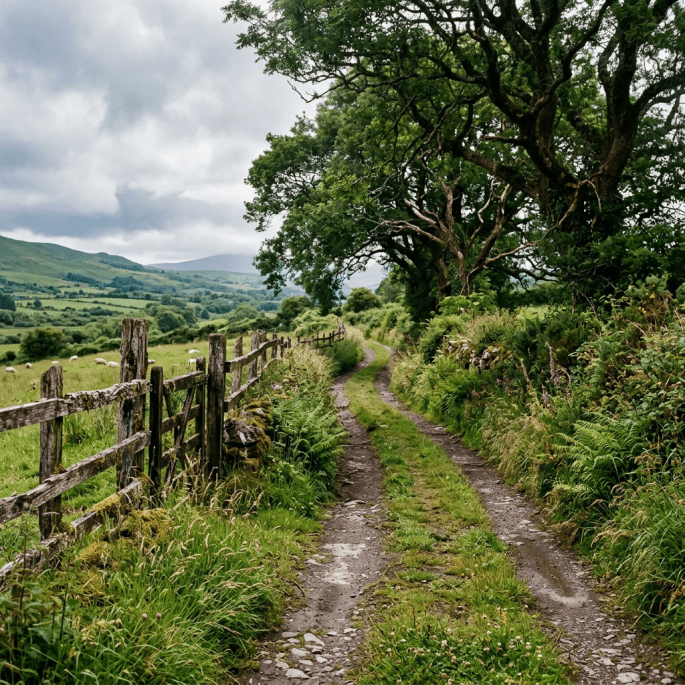
We leave the bóithrín behind us —
grass taller here, ruts softened over,
wind slowing as if it too
remembers to be careful.
At the wood’s edge, light
changes at once —
no harsh brightness, only green-gold,
shifting slowly, like held breath.
Roots twist above ground, old
knuckles of timber, gripping earth;
moss lies thick as unspoken words,
softening every stone and fallen branch.
The air smells of damp bark, turned
soil, fern fronds unfolding —
and beneath it all: stillness — not
empty, but waiting.
A wren flits from bramble to oak,
quick as a secret:
further in, the shapes of trees stand
like old sentences no one has finished reading.
Nothing rushes here. Rain hungers
less, sun does not pry —
everything arrives, passes,
leaves it exactly as it is:
rooted, steady, present —
holding space, as if something is due,
though no sign says who, or when, or why.
The ground rises slightly — an old line,
or a threshold, half-lost in ivy;
hare tracks press lightly in damp
earth, then vanish inward…
and all around, the quiet deepens —
not silence, but patience that
outlives seasons.
We do not cross further yet.
We only stand —
feeling how it remains:
always here, always open,
untroubled by hurry or answer,
breathing in light and shadow alike —
waiting,
waiting…
and we do not dare ask for what.
Copyright © 2026 Pat Fitzgerald
All Rights Reserved
Kings Quote:
We have to listen to what is being said, just as we must learn to see what is already before us.
bóithrín : Small Road, lane : BOH-reen
Thank You for joining me on this journey of writing and discovery. Poetry, for me, is a continuous learning process. A way of finding my own voice and writing style and exploring the beauty of words.
I also write from the heart and never with the intention to cause offence. However, if anything I write ever causes discomfort, please know it is never my purpose. I am only human and occasionally typos or small errors may slip through; I do my best to correct them as soon as they are found.
Support My Work
Running this blog involves time and costs. If you enjoy my writing and would like to help keep this space alive, there are two simple ways you can support me:
Click on the advertisements, Every click helps, no matter how small and goes a long way towards covering expenses.
Buy Me A Coffee
If you feel inclined, you can leave a small donation via the link below. It helps with the upkeep of the site and it is always greatly appreciated.
Please know there is absolutely no obligation. Your readership and support means the world to me already.
With Gratitude,
Pat Fitzgerald


I like your description of editing as renovation. That is so true. When we write our ideas down on the page they are an outline of what we think we want to say. But often they do not make a sturdy construction for the poem. Sometimes the roof is where the foundation should be. I have moved lines about many times after I first wrote them down until they made sense. Have a wonderful evening Pat. Allan
LikeLiked by 1 person
Thank you Allan I have enjoyed taking on challenges that also challenge my abilities and helps to improve my skills as a poet. This very poem was certainly like renovating a room.. most especially in editing..
LikeLiked by 1 person
Wow! So Great Pat!!!! Loved your introduction, especially the part about editing!!! And the lessons learned!! This was really a great introduction to a Masterful Poem, Pat!!!! Bravo, Bravo!!Chuck 😁✨👌👍
LikeLiked by 1 person
Thank you Chuck, I know the poem could have been better or so I feel, but keeping within the rules of this challenge it was the best that I could do.. And I believe that it was one heck of a challenge.. glad I did it also..
LikeLiked by 1 person
You did great!!! I really enjoyed this!!!
How are you doing these days????
Chuck 😁✨👌👍
LikeLiked by 1 person
I am good my friend, ,ight drop an emal when I get a chance to. It’s been a busy time. I have been enjoying doing what I have been doing these days.. Currently I have something different in the works for a poem. If that works it should be interesting to say the least..
LikeLiked by 1 person
I’ll look forward to hearing from you!!!! 😁✨👌👍
LikeLiked by 1 person
it will come my friend..
LikeLiked by 1 person
A beautifully restrained meditation on waiting, silence, and presence. You leave just enough unsaid for the reader to enter the poem and find their own meaning. The final “waiting…” lingers long after the last line.
LikeLiked by 1 person
Thank you for the feedback… and spot on with the meanings. It is good to allow space for the reader to find their meanings in it.
LikeLiked by 1 person
Every compliment feels like watering down your work by trying to explain and follow what was already compressed and living.
First comment:
[ ]
Comment on the first comment:
Shortest artist statement I know is
artIStatement:)
Every addition feels like changing the original, watering it down or guiding where wildness opens paths. How can freedom of interpretation be achieved fully? Silence?
What must be said?
Where to store a memory – print, online or memory of others? What holds the longest? What stays and stays like it was?
Why do many traditions have an oral and a written line of sharing? A word changed is a word newly built by the reader and within the reader. An interpretation stands on/besides/within/around a word/work – how many reviews/feedbacks do we need to gain more insights and which ones do we lose by that? “This is bad” – is a good sentence – yet which path of thinking have we created by that? “This is not a crossroad” of thinking – no matter what you think – but have we tightened the freedom of the reader? This is not a title. This is not a sentence. Do not read this. Forget this word. The sentence following is true. The one before is wrong. Both are.
What must be said? If help or empathy can be read as empty at hy! already? What are we trying to archive? Being alive?
Maybe written and even words spoken carry only meaning which can not be held by other than silence?
The moment we try to grasp we take away a piece of what it was. Even memories, images in us fade. But sometimes a feeling stays with us. Just one – that something beautiful happened. Is that not enough? While reading it again we might find new meaning but everything is only ever read once. How long do we follow the river of meaning and build words around it and hope it will feel like that one moment? When does that light fade into sorrow? Which word breaks it into longing and loss? Archive or Alive?
For me, there is only love and love poetry. The poets try to paint the unspeakable. The moment we were, means we are, still. But how do we use that gift? Follow a past that can not be entered or let go and find that moment again? How many Nows have we sacrificed for a single moment? How much light do we blind when we focus on one bright? How to declare love without ever crossing a thought? No editing is true, no correction possible, a typo means we have not taken a moment in words seriously enough? Why do the words Ma,Mum and Mama ring the same meaning? “Good” Ma, “Bad” Ma, “all” Ma – three empty template words and one meaning with three symbols? So, do we find meaning or do we ascribe it? Assemble it maybe with memories? Maybe poetry like painting is created within the reader/viewer? Words only remind us of what we have forgotten or assumed into emptiness? Love needs only one time to teach us all there needs to be said, and can be said – a look alone… Absence of love speaks in silence – shaping our awareness and image of love – us ourselves. If felt truly, what could words ever add to these worlds?
These were a fraction of impressions and light that your work created instantly. Within. The comment is just the try to draw the lines after that ray of warmth and light. It makes feelings and thoughts transparent, nameable – gives direction and context. It maybe all starts with one feeling – the rest is just the refusal to live that moment. What is better – a moment for 3 seconds and a memory forever or a moment lost to a try to screenshot it that lasts 3 seconds and only leaves a text we read a second time? A poem should make us cry in joy and leave no time or room for any other action. Every sentence that ends is a new page in the life of a new person, a person that has never read that poem because the first reading changed who they were. . Exactly here the past and future meet. One last thought. Belonging to neither who we were nor who we become. But who we are?
We are poets. We breathe when we read. We live when we write. And that eternal distance between words and their meanings? We shorten it. In by on through with from for to Love and more:)
Ups, this escalated quickly😂 This was my try to say nothing but let the work speak for itself. Which comment works better for you? Does the poem have any similarity with the comment in regards to feelings?
Poetry writes us.
LikeLiked by 1 person